DeepSeek is a Chinese AI company, based in Hangzhou, that builds large language models and releases many of them with open weights. It is also the name of the free, ChatGPT-like chatbot built on those models. When people search for DeepSeek AI, they usually mean one of three things: the company, the chatbot, or the models you can call through an API.
The company was founded in 2023 and drew worldwide attention in early 2025, when its chatbot climbed app store charts and its models matched much pricier rivals on many reasoning and coding tasks. Since then it has kept shipping new model versions, and the name now covers a whole family rather than one product.
This article explains why DeepSeek matters, how to use it in the browser, on your phone and through an API, which models exist, and what to check on privacy before you send it real data. At Geodd we serve DeepSeek models through an OpenAI-compatible API, so some of what follows comes from the builder's side.
Why DeepSeek matters to you
DeepSeek matters because it made strong reasoning models cheap to run and open to inspect. That changes what you pay, who can host the model, and which assistant you pick for daily work.
Strong results at a low price
DeepSeek-V3 is a Mixture-of-Experts model with 671B total parameters, of which only 37B activate for each token. Because only a fraction of the model runs per token, serving it costs far less than a dense model of the same size. DeepSeek's technical report put the final V3 training run at roughly $5.6 million in GPU rental terms. That figure excludes research and earlier experiments, but it was still a fraction of what US labs were widely assumed to spend.
The result was a price shock. Chat access became free, and API prices came in well below what the market expected for reasoning-grade models.
Open weights change who can run it
Open weights mean you can download the model files, inspect them, fine-tune them, and run them on hardware you choose. You are not tied to the company that trained the model. This is why hosted providers, including Geodd, can offer DeepSeek models under their own data-handling terms.
Open weights separate the model you like from the company that built it.
How it compares with ChatGPT
There is no single winner. DeepSeek is very strong for coding, math and step-by-step reasoning, and it is free to chat with. ChatGPT ships more surrounding features, such as voice and image generation. If you mostly work with text and code, or you care about API cost, DeepSeek is worth testing side by side on your own prompts. If you want one all-in-one assistant, ChatGPT's wider product still has the edge.
How to use DeepSeek in the chat, app and API
You can use DeepSeek for free in a browser or the official mobile apps, and you pay per token when you call it through an API. Pick the route that matches your task.
Use the web chat or mobile app
- Open the official DeepSeek website and choose the chat option.
- Sign up or log in. The DeepSeek login is a standard account.
- Type your prompt. Turn on DeepThink when you want the model to reason step by step, and Search when you need current web information.
- On a phone, install the official app from the App Store or Google Play. Check that the publisher is DeepSeek.
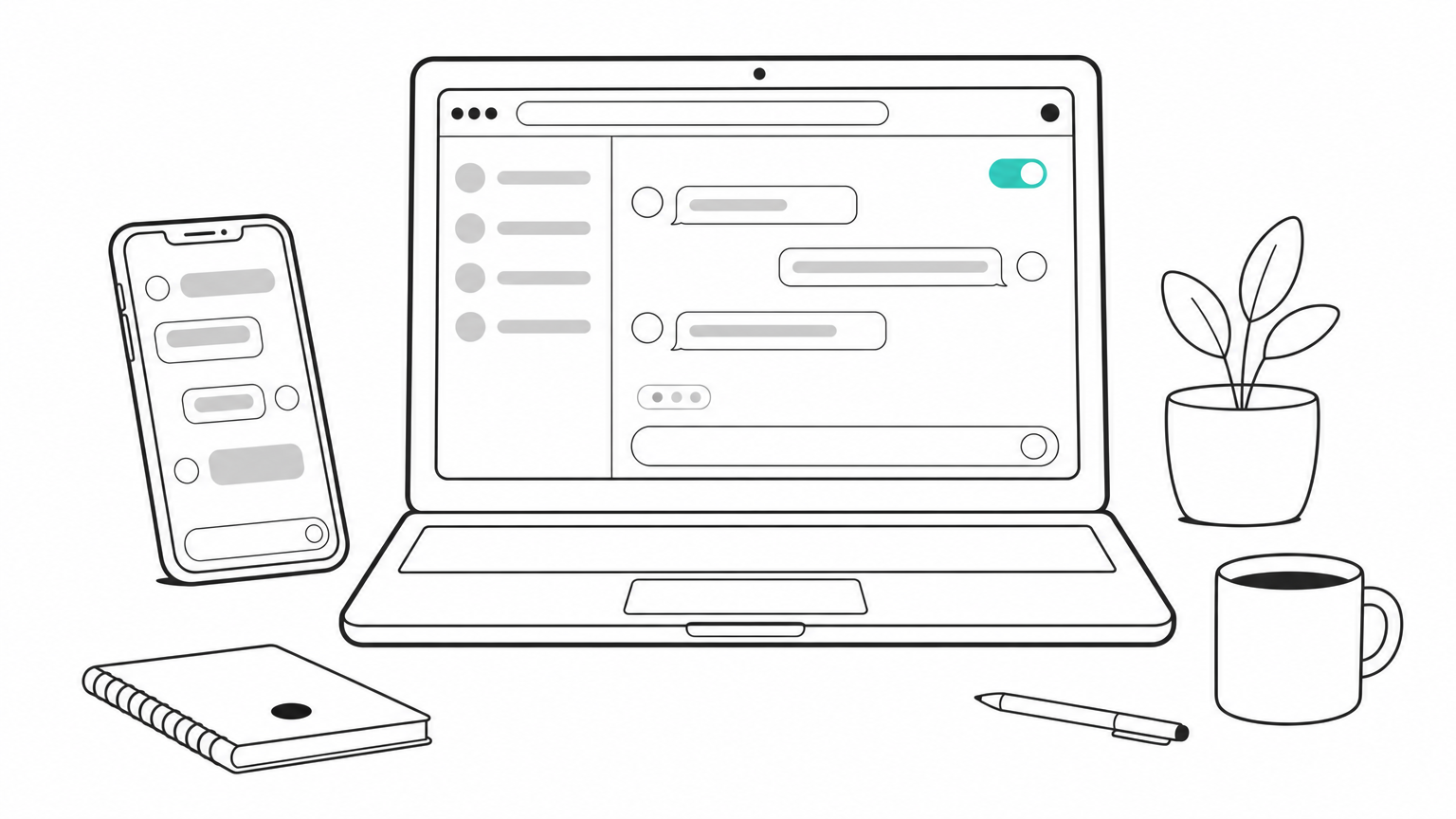
There is no need for a desktop download. On Windows or Mac, the browser version does the same job. Be careful with any "DeepSeek for Windows" installer from a third-party site, because it is not from the company.
Is DeepSeek free?
The chatbot is free to use. The API is not. API usage is billed per token, and each provider sets its own price. Free chat access is a policy choice that could change, so check the current terms on the official site.
Call the models through an API
If you are building an application, use the API. Because Geodd is OpenAI-compatible, you keep the standard OpenAI SDK and change the base URL, API key and model ID:
from openai import OpenAI

client = OpenAI(
    base_url="BASE_URL_FROM_THE_MODEL_PAGE",
    api_key="YOUR_API_KEY",
)

response = client.chat.completions.create(
    model="deepseek-ai/DeepSeek-V4.1-Flash",
    messages=[{"role": "user", "content": "Explain mixture-of-experts in two sentences."}],
)
print(response.choices[0].message.content)
The chat is free, and the API is where you pay per token.
Which DeepSeek models exist
DeepSeek has released several generations. Knowing which one you are talking to matters, because pricing, context length and behavior differ by version.
From V3 and R1 to the V4 family
DeepSeek-V3 arrived in late 2024 as a general-purpose chat model. DeepSeek-R1 followed in January 2025 and added visible step-by-step reasoning. That reasoning mode is what the DeepThink toggle in the chat is built around. The V4 family is the current generation, and it is the one most API buyers evaluate today.
The current V4 lineup on Geodd
This table lists the V4-generation endpoints on Geodd, with prices per 1M tokens.
| Model | Input | Output | Context | Max output |
|---|---|---|---|---|
| DeepSeek V4.1 Flash | $0.30 | $1.10 | 1.05M tokens | 384K tokens |
| DeepSeek V4 Pro | $1.48 | $3.40 | 1M tokens | 80K tokens |
| DeepSeek V4 Flash | - | - | 1.05M tokens | 393.22K tokens |
All three are text models served from US-EAST with zero data retention by default. V4.1 Flash and V4 Flash are separate versions, so do not assume they behave or cost the same.
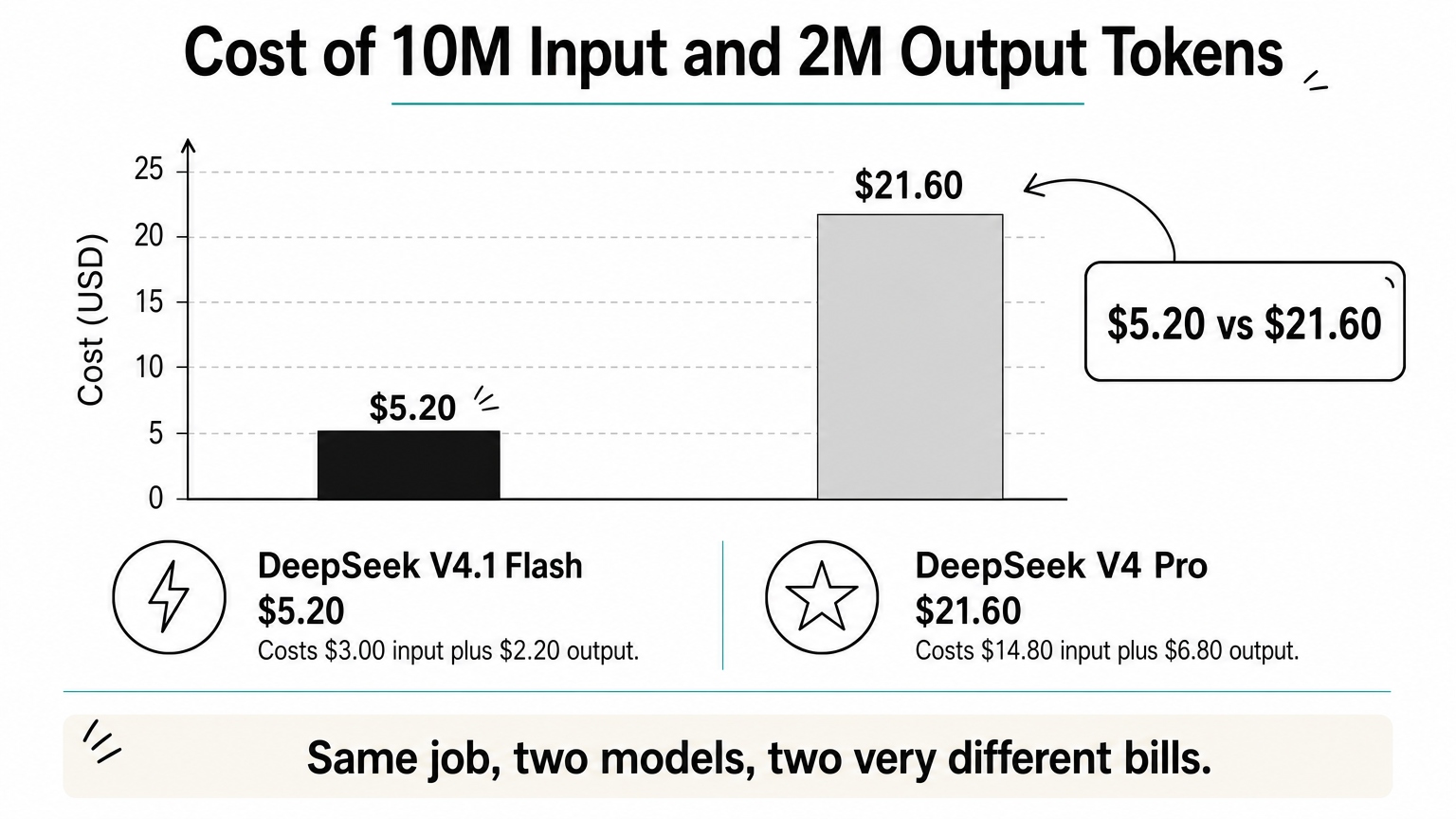
Here is a worked example. A job that sends 10M input tokens and gets 2M output tokens costs $3.00 + $2.20 = $5.20 on V4.1 Flash. The same job on V4 Pro costs $14.80 + $6.80 = $21.60.
Choosing between Flash and Pro
Pick a Flash model for fast coding, software-engineering agents and high-volume workloads. Pick V4 Pro when the task is hard reasoning, complex coding or knowledge-heavy agent work, and the roughly four times higher bill is justified by better answers. Test both on a sample of your real prompts before you commit.
Start with Flash, and move to Pro only where Flash visibly fails.
Is DeepSeek safe to use and available in the US?
DeepSeek is reachable from the US, but the consumer app deserves caution with sensitive data. Where your prompts go matters more than which model answers them.
What to know about the consumer app
DeepSeek's privacy policy says user data is stored on servers in China. Researchers also reported an exposed DeepSeek database in early 2025. The chatbot can also decline or reshape answers on topics sensitive to the Chinese government. Some governments and agencies have restricted the app on official devices, so check your employer's rules before installing it for work.
A practical rule for your data
Do not paste credentials, customer records or proprietary code into any consumer chat app, DeepSeek's included. For personal questions and public information, the risk is low. For anything confidential, use a hosted API from a provider whose data terms you have read.
Running the models elsewhere
Open weights let other providers serve the same models under different terms. Geodd's DeepSeek V4 endpoints use zero data retention by default, we do not use API data for model training, and we do not store prompts, outputs or uploaded files unless separately agreed in writing. EU customers get inference hosted in EU data center infrastructure by default. These terms cover the models served by Geodd. They do not describe DeepSeek's own chat app.
The model is not the privacy risk. The service that receives your prompts is.
Where to go from here
DeepSeek is a Chinese AI lab, a free ChatGPT-like chatbot and a family of open-weight models. Use the chat for everyday questions, and turn on DeepThink when a problem needs real reasoning. Keep sensitive data out of the consumer app. If you are building something, choose a model version deliberately and compare Flash and Pro on your own prompts.
When you are ready to test, you can try DeepSeek V4.1 Flash API access on Geodd. That page lists token pricing, context limits, data handling and integration examples.