gpt-oss 120b vs GPT-4o: Benchmarks, Cost, and Which to Pick
gpt-oss 120b vs gpt-4o compared on price, benchmarks, speed, and capabilities, plus a quick way to test both on your own prompts.
10 min readRead story
gpt-oss 120b vs gpt-4o compared on price, benchmarks, speed, and capabilities, plus a quick way to test both on your own prompts.
53 articles
See DeepSeek-V4-Flash Vision benchmarks vs Opus 4.8, pricing breakdowns, and how to run it via Geodd's OpenAI-compatible API with steady, low-latency inference.
See the best AI models for coding 2026, ranked by benchmark scores, price per token, and the tasks each one handles best.

Learn what data residency means, how it differs from sovereignty and localization, what GDPR requires, and how to keep your data in approved regions.
Looking for a free OpenAI API alternative? Compare 7 free tiers and local options with real limits, base URLs, and what each costs once free ends.
Compare six AI video generation API options on quality, pricing, free access and integration, plus what happened to the Sora and Veo APIs.

The best LLM for your workload is the model and provider configuration that meets your application’s quality, latency, reliability, and budget requirements. Define acceptable results, compare candidates on representative tasks, and test realistic

Set up the GLM 5.2 API in four steps: pick a provider, get a key, send a first request, cut costs. Includes price ranges and honest free options.
Kimi API pricing explained: per-token input, output and cache rates for K3 and K2.6, a worked cost example, and API versus subscription.
Learn how to get a Seedance 2 API key, compare providers, estimate per-clip costs, and send your first text-to-video request with working code.
gpt-oss-120b vs gpt-5 compared on benchmarks, price, context window, speed and data control, with a worked monthly cost example to pick a model.
GLM 5.2 benchmarks compared with Opus 4.8 and GLM-5.1 on coding, agents and long context, plus cost, speed and how to test it yourself.
LLM coding explained: what code LLMs do, six models compared on exact API pricing and limits, and the workflow developers use to ship tested code.
Learn how to use the Kimi API: create a key, set the base URL, pick a model, check pricing, and send your first request in Python or curl.
Compare 8 AI agents platform options for no-code and developer teams, with pricing, free plans, and who each suits, so you can pick the right one.
GLM coding explained: what Z.ai's GLM models do, what the Coding Plan costs, which tools work with it, and when a pay-per-token API is the better deal.
Compare 8 DeepSeek alternative options for chat, open-source, API and coding use, with free tiers, per-token prices and a cost example for 60M tokens.
Zero data retention explained: what ZDR covers, how OpenAI, Anthropic and OpenRouter implement it, and a checklist to qualify for it and verify it.
Learn how to use the Seedream 4.5 API: compare hosts and per-image prices, get an API key, send a first request, and handle async results safely.

Learn what AI agent infrastructure is, how runtime, orchestration, storage, tools, and observability fit together, and which failures to prevent first.
See the best open source coding models for 2026, from GLM 5.3 Flash to Gemma 4 31B, with who each suits, license notes, and how to test them.
Learn what makes GDPR-compliant AI tools safe for personal data and compare five setups, from EU-hosted APIs to self-hosting and redaction layers.
DeepSeek V4 Flash requirements explained: memory by quant tier (92 to 169 GB), VRAM, RAM, disk, and the exact llama.cpp steps to run it.
Download DeepSeek-V4-Flash NVFP4 from Hugging Face, plan for its 145 GB memory footprint, and serve it with vLLM or SGLang on Blackwell GPUs.
Compare 8 AI image generation API options with pricing, free tiers, and features, so you can pick one and ship your first call today.
DeepSeek R1 vs V4: compare cost per completed task, test on your own logs, and route work between V4 Pro and Flash with a four-stage migration plan.
Learn how multimodal AI models combine text, images, audio, and video, see real examples and limits, and get a test plan to pick the right one.
AI benchmarks explained: which tests matter in 2026, how to spot noisy scores, and how to build a 50-100 task test set to pick your model.
How OpenAI structured output works: set strict schemas with Pydantic or Zod in Responses and Chat Completions, and handle refusals and pitfalls.
Compare the best LLM for coding in 2026: 9 models by use case and price, plus how to build a tiered setup and test on three real tickets.
DeepSeek-V4-Flash size explained: calculate weights, KV cache, and headroom, compare FP8 vs 4-bit quantization, and pick hardware or a serverless API.
Compare GPU cloud pricing across 7 providers: A100, H100 and B200 hourly rates, plus egress fees, minimums, and which option fits your workload.
Compare 12 LLM benchmarks and leaderboards, from SWE-bench to Chatbot Arena. See what each measures, where it misleads, and which fits your workload.
Compare the best AI models for coding in 2026 by SWE-bench score, price, and context, plus a cheap-first routing plan to cut cost per fix.
Learn how to use the DeepSeek V4 Flash API with Python and JavaScript. Compare pricing, model IDs, context limits and V4.1 changes before deploying.
Learn what an OpenAI compatible API is, how to switch providers with just base url and key changes, and a checklist for migrating with Geodd.
Compare every way to try DeepSeek V4 free: chat app, API credits, router endpoints, self-hosting, and when to upgrade to Geodd for production.
See DeepSeek V4 Flash benchmarks, context window limits, and pricing vs GPT-OSS-120B and GLM-5.2, plus how to deploy it via Geodd's API.
See how DeepSeek V4 benchmark scores stack up against Claude Opus, spot red flags in reports, and turn results into production decisions with Geodd.
Learn to set up the DeepSeek API: get a key, pick chat/coder/reasoner models, wire the SDK, and control costs before scaling with Geodd.
Get your DeepSeek API key set up, secured, and tested, plus pricing tips and a backup plan for rate limits during agentic workloads.
See how the DeepSeek API price breaks down for V4 Flash and Pro, with a worked cost example and tips to avoid retry-driven bill spikes.
Compare minimax m3 vs deepseek v4 pro on benchmarks, pricing, and coding, then test both via Geodd's unified API to pick the right fit.
Compare 7 top OpenAI API alternative options in 2026, from Claude and Gemini to Geodd, covering pricing, compliance, and agentic workload reliability.

Geodd now supports ByteDance’s Seed, Seedream, and Seedance model families for language and agent workloads, image generation, and AI video generation. The models are available through Geodd’s production inference platform.

Geodd is a GDPR-ready AI inference provider focused on data minimization and secure processing. It does not store standard API prompts, outputs, request/response bodies, or customer datasets, and API data is not used for training or human review.
Geodd is partnering with Opper AI to make Geodd’s inference infrastructure available through the Opper AI gateway.

Geodd EU serverless inference is now live, starting with GPU infrastructure hosted in Norway. EU customers can now run supported models through Geodd with inference traffic served within the EU region, helping teams meet data residency, regional
Gemma 4 31B IT is available on Geodd for teams evaluating 31B-class open-weight inference. It is a fit when the workload needs stronger reasoning, coding support, long-context handling, multimodal capability, or instruction-following quality that
DeepSeek-V4-Flash is now available on Geodd, based on Geodd-provided product information. It is relevant for teams evaluating DeepSeek-V4-Flash for production inference where workload fit, latency, throughput, cost behavior, context length, and

Inference infrastructure with direct engineering support means the provider does more than supply GPUs, model endpoints, or a support queue. Engineers are involved in deployment, monitoring, scaling, incident response, workload tuning, and

A dedicated GPU gives your team reserved GPU compute. Dedicated AI inference gives your team a dedicated or isolated inference environment that may include serving runtime, monitoring, scaling, optimization, and support, depending on provider scope.

The total cost of self-hosted inference is not only the hourly GPU price. It includes GPU capacity, supporting compute, storage, networking, orchestration, observability, engineering time, runtime tuning, scaling, incident response, and the cost of
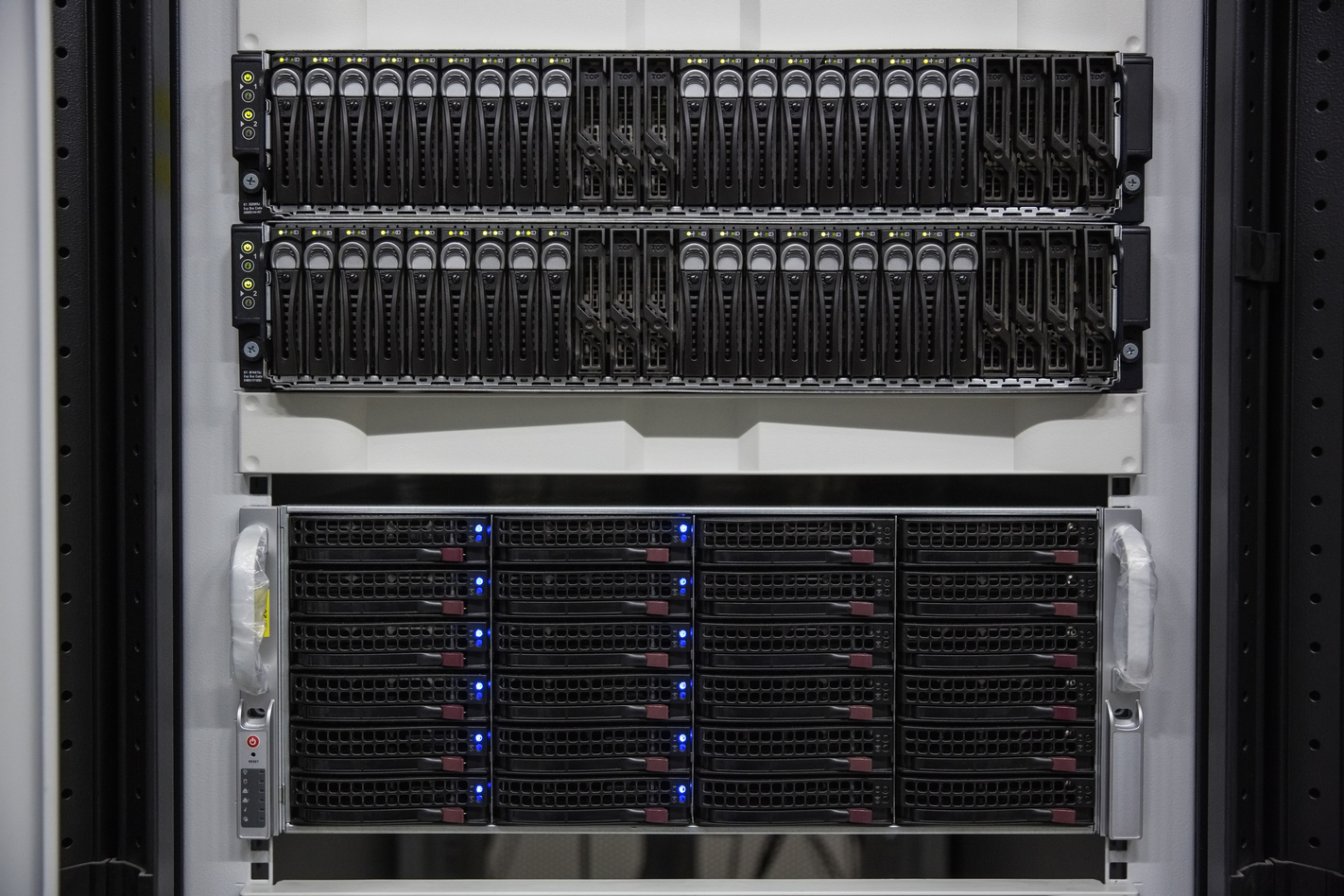
Serverless inference is usually the better fit for variable, early-stage, or unpredictable workloads where teams want managed API access without provisioning inference infrastructure. Dedicated inference is usually the better fit when workloads are