The best Together AI alternative for serverless inference serves the same open models behind an OpenAI-compatible API, bills per token, and fits your region and data rules. Geodd suits teams that want low per-token rates on GLM, DeepSeek, and GPT-OSS models with zero data retention. Fireworks AI is the closest feature match. OpenRouter suits teams that want many providers behind one key. Modal and Baseten suit teams that run their own models.
Together AI runs open-source models through an API, with dedicated endpoints and fine-tuning on the side. Teams usually leave for one of four reasons: a model they need is missing, the price per million tokens no longer fits, latency swings at peak hours, or compliance wants to know where prompts are processed. Switching is cheap when the API follows the OpenAI format, so testing a replacement with real traffic costs you an afternoon.
This article compares five options on how they work, who they suit, and how they charge. Geodd is our own service, so it comes first and we state where it falls short. For the other four we describe the model of the product and leave exact rates to you, because they change often. Check each provider's pricing page before you commit.
1. Geodd for low per-token pricing on open models
How it works
Geodd serves open models through a serverless API with OpenAI SDK compatibility. Moving from Together AI usually means changing the base URL, the API key, and the model ID. Scaling is automatic and the infrastructure is fully abstracted. The same SDK also covers dedicated compute if you outgrow serverless later.
Speed comes from Geodd's own engineering. Its AI agents write and refine hardware-specific kernels, and improvements that pass verification are deployed into serving automatically.
Moving from Together AI to Geodd is a base URL, API key, and model ID change.
Who it suits
Geodd fits teams building coding agents, long-context applications, and high-volume text workloads. It also fits teams with privacy requirements. Geodd does not use API data for training and does not store prompts, outputs, or uploaded files unless separately agreed in writing. It is GDPR ready, and SOC 2 compliance is still pending, so check that against your procurement rules.
Pricing and trade-offs
Pricing is per token. These are three models Geodd offers, with input and output rates per 1M tokens:
| Model | Input | Output | Context | Max output |
|---|---|---|---|---|
| GLM 5.3 Flash | $0.110 | $0.400 | 1.05M | 128K |
| DeepSeek V4.1 Flash | $0.300 | $1.100 | 1.05M | 384K |
| GPT-OSS-120B | $0.039 | $0.158 | 131.07K | 131.07K |
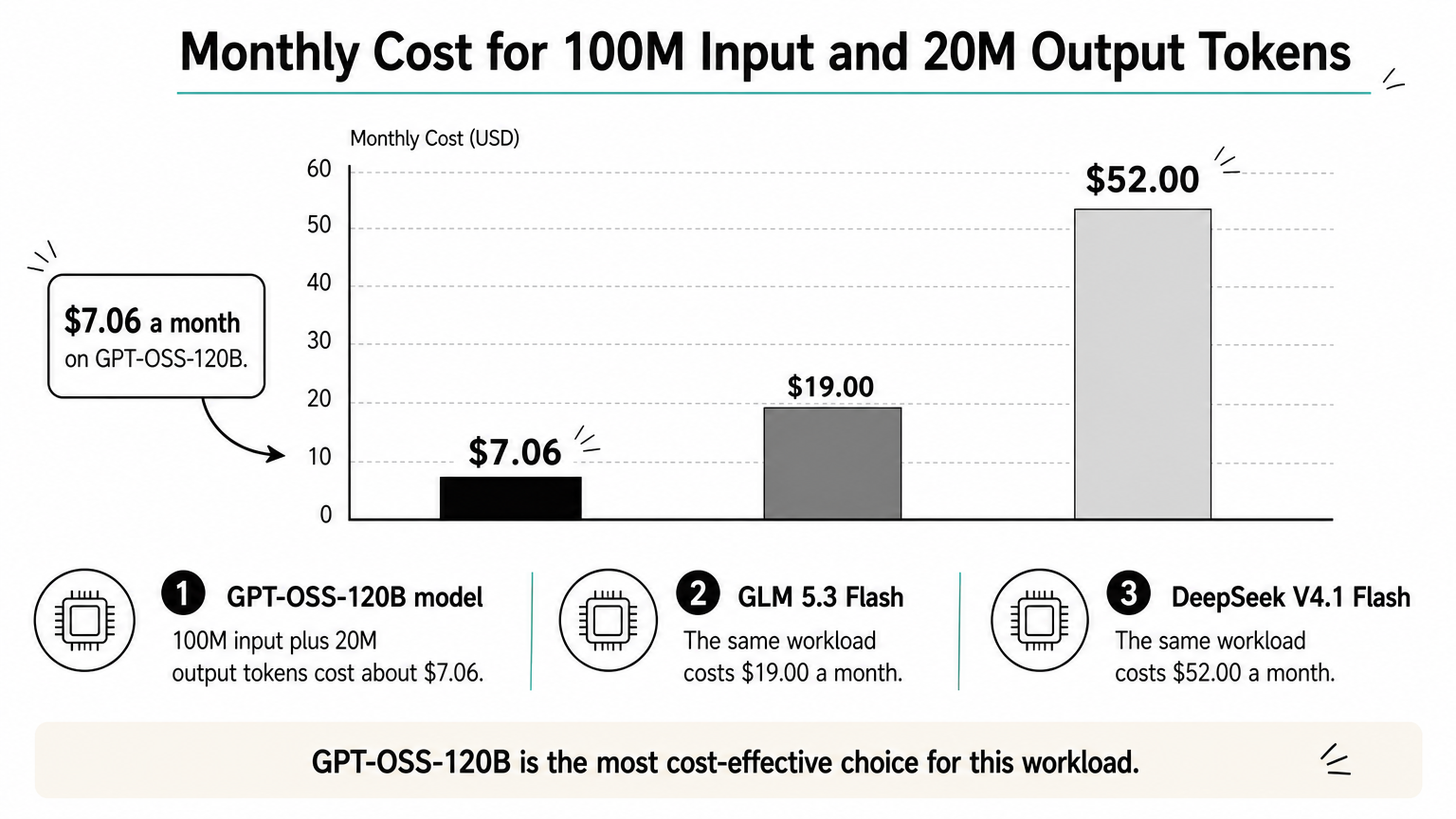
Take a workload of 100M input and 20M output tokens a month. GPT-OSS-120B costs about $7.06 (3.90 + 3.16). GLM 5.3 Flash costs $19.00 (11.00 + 8.00). DeepSeek V4.1 Flash costs $52.00 (30.00 + 22.00).
The trade-off is catalog breadth. Geodd offers a focused set of models, not every open model. Look for your model in the model catalog before you plan a migration.
2. Fireworks AI for the closest feature match
How it works
Fireworks AI runs open models through a serverless per-token API that follows the OpenAI format. On the same platform you can move to on-demand dedicated GPU deployments and fine-tune models. That mix of serverless, dedicated, and tuning mirrors what Together AI offers.
Who it suits
Fireworks suits teams that want a like-for-like replacement with minimal rework. If you use Together for serverless calls today and might add fine-tuning or a dedicated deployment later, you can keep one vendor for all of it.
Pick Fireworks when you want Together's feature set with a different speed and price profile.
Pricing and trade-offs
Serverless usage is billed per token, with rates that vary by model, and dedicated deployments are billed by GPU time. Because the product is so similar to Together's, your gains come from price and speed on your specific models, not new capabilities. Run your own prompts through both providers and compare time to first token and cost per finished task.
3. OpenRouter for one key across many providers
How it works
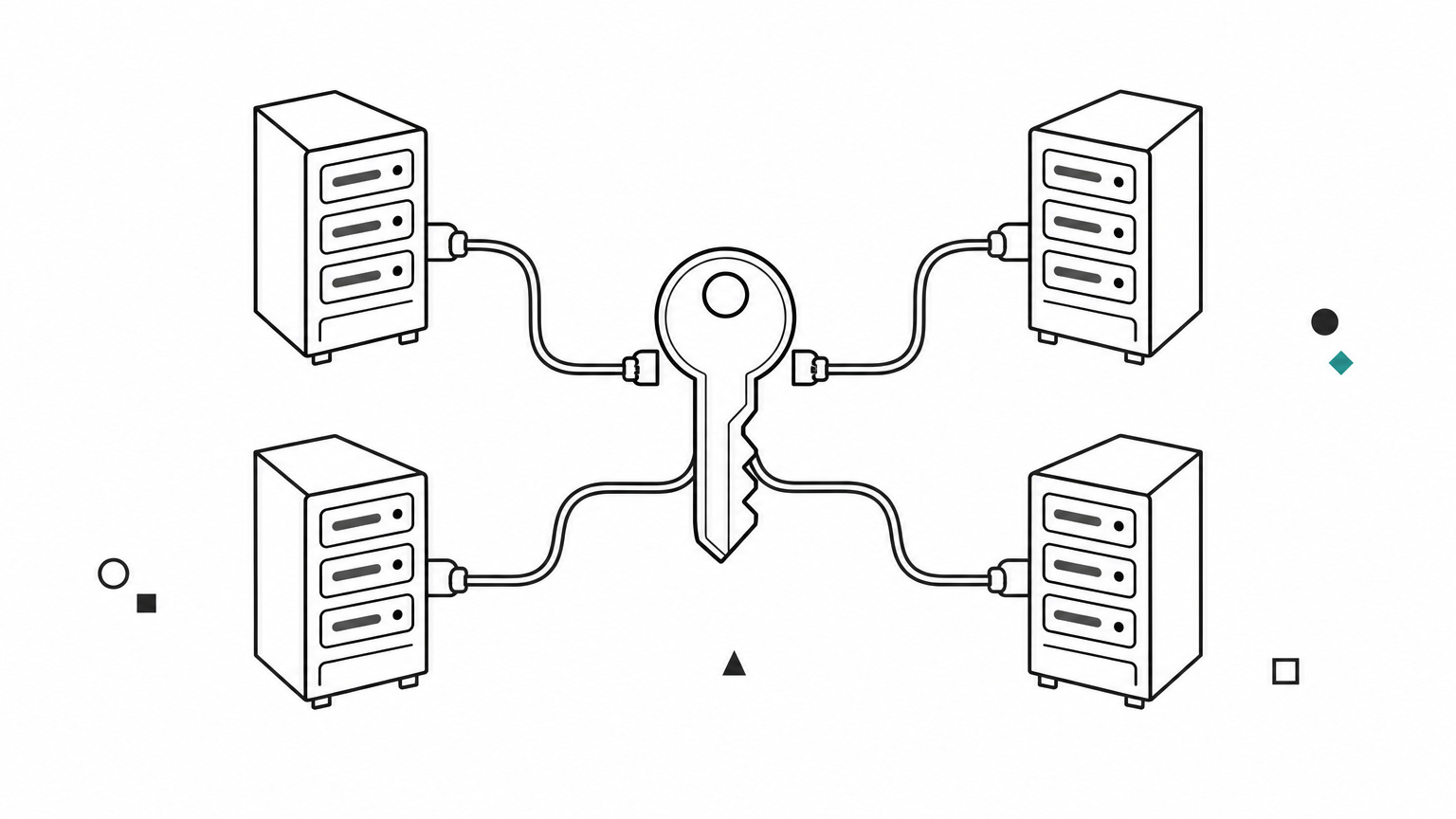
OpenRouter is a single API and key that routes requests to models hosted by many providers. It follows the OpenAI format. For a model hosted in several places, it can choose among providers and fall back when one is down.
Who it suits
It suits teams comparing many models, prototyping, or wanting a fallback if one host fails. If your Together replacement is really a model-selection problem, an aggregator lets you test a dozen models without a dozen signups.
OpenRouter solves model choice and uptime fallback, not the speed of any single host.
Pricing and trade-offs
You pay per token at rates shown per model and provider, and you should check how it charges when you buy credits. The cost of the extra layer is that latency and data handling depend on the provider that serves each request. Read the data policy for every model you route to, especially if prompts contain customer data.
4. Modal for custom code on serverless GPUs
How it works
Modal is a serverless Python platform. You write a function, attach a GPU, and Modal runs it on demand and scales to zero when idle. For LLMs you bring the inference engine, such as vLLM, and expose your own endpoint.
Who it suits
Modal suits teams with fine-tuned or custom models, and teams whose pipelines go beyond text into image, audio, or batch jobs. It is for engineers who want control over the serving stack. If you only want to call a hosted open model, it is more work than you need.
Modal gives you control over the serving stack, and you pay for it in engineering time.
Pricing and trade-offs
Billing is by compute time, not by token. Your cost per token therefore depends on GPU utilization and cold starts. Steady traffic can be efficient, while spiky traffic with idle gaps needs tuning. You also own the serving code, upgrades, and performance tuning.
5. Baseten for production and dedicated deployments
How it works
Baseten deploys models onto autoscaling dedicated GPUs, with models packaged using its open-source Truss framework. It also offers hosted model APIs that are priced per token, so you can start serverless and move to your own deployment.
Who it suits
Baseten suits production teams with custom models, strict latency or throughput targets, and the willingness to manage deployment settings. It is a stronger fit once traffic is steady enough to justify reserved capacity.
Baseten pays off when traffic is steady and you need control over capacity.
Pricing and trade-offs
Dedicated deployments are billed by GPU time while replicas run, and model APIs are billed per token. The setup is heavier than a pure API. At low volume, dedicated GPUs can cost more than per-token pricing, so estimate your monthly tokens before you choose.
Which one to test first
Start from your situation. If you want hosted open models with low token rates and strict data handling, test Geodd. If you want the nearest copy of Together's features, test Fireworks AI. If you are still choosing models, use OpenRouter. If you run custom models, look at Modal or Baseten.
Whatever you pick, replay a day of real prompts against two providers. Compare time to first token, error rate, and cost per completed task. For token rates on the models in this article, see Geodd's pricing and estimate your monthly bill.